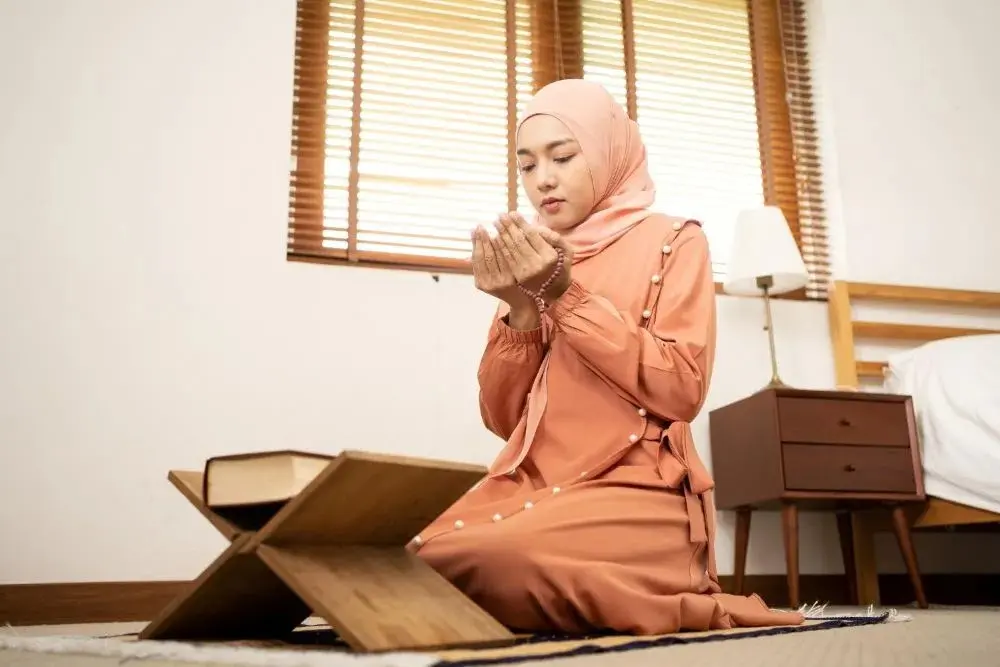
Prayer is one of the forms of worship that is closest to human life. Through prayer, a servant acknowledges their weakness and their need for the help of Allah Subhanahu wa ta'ala.
Islam teaches that prayer is not merely a series of words, but a spiritual practice that requires proper manners, timing, and guidance to ensure closeness to and acceptance by Allah. To make your moments of prayer more meaningful, let us explore a collection of mustajab prayers along with the best times to recite them.
What Is a Mustajab Prayer?
The term doa mustajab refers to prayers that are granted or are more easily accepted by Allah Subhanahu wa ta'ala. However, it is important to understand that the acceptance of a prayer does not always mean that the request is fulfilled immediately and exactly as asked. There are several forms of prayer acceptance, including:
-
Allah grants the request as asked.
-
Allah delays the fulfillment because the best time has not yet come.
-
Allah replaces the request with something better.
-
Allah prevents what is asked for because it would be harmful, and replaces it with another form of goodness.
-
Allah stores the reward of the prayer for the Hereafter.
With this understanding, a mustajab prayer does not only mean one that is immediately granted, but also a prayer that is offered in the correct manner and at the right time, making it more valuable in the sight of Allah. In addition, mustajab prayers are closely related to proper etiquette in supplication, such as sincerity, strong belief in Allah, patience, and praying with a heart full of hope.
The Best Times for Prayer to Be Accepted
There are several moments in Islam that are recommended as mustajab times for prayer. During these moments, Muslims are encouraged to increase their supplications with deep concentration and hope. These times include:
The Last Third of the Night
It is narrated in Bukhari and Muslim that the Prophet ﷺ said that during the last third of the night, Allah descends with His mercy to the lowest heaven.
Meaning: Allah descends to the lowest heaven every night during the last third of the night and says: “Who is calling upon Me so that I may answer him? Who is asking Me so that I may give to him? Who is seeking My forgiveness so that I may forgive him?” (HR. Bukhari no. 1145, Muslim no. 758)
When Rain Falls and Between the Adhan and Iqamah
Another mustajab time for prayer is when rain is falling and the time between the adhan and the iqamah. This is based on the saying of the Prophet ﷺ:
Meaning: “Two supplications are not rejected: supplication at the time of the call to prayer and supplication when rain falls.” (HR. Al-Hakim, 2534)
At the Time of Breaking the Fast
In addition to being a moment to eat and drink again, the time of breaking the fast is also blessed because prayers are accepted, as mentioned by the Prophet Muhammad ﷺ:
Meaning: “There are three prayers that are not rejected: the prayer of a fasting person when breaking the fast, the prayer of a just leader, and the prayer of an oppressed person.” (HR. Tirmidhi no. 2528, Ibn Majah no. 1752)
On the Night of Lailatul Qadr
Lailatul Qadr is the night when the Qur’an was revealed. Therefore, Muslims are encouraged to increase their prayers, as narrated by Aisyah r.a.:
Meaning: I asked the Messenger of Allah, “O Messenger of Allah, if I know which night is Lailatul Qadr, what should I say?” He replied: “Say: Allahumma innaka ‘afuwwun tuhibbul ‘afwa fa‘fu ‘anni.” (HR. Tirmidhi, 3513)
During Prostration in Prayer
The time of prostration is when a servant is closest to Allah. Therefore, the Messenger of Allah ﷺ encouraged increasing supplication during prostration.
Meaning: “The closest a servant is to his Lord is when he is prostrating, so increase your supplications.” (HR. Muslim, no. 482)
Outside of these moments, it does not mean that prayers cannot be accepted. These recommended times are simply moments when supplication is more encouraged, as the heart is usually calmer and more focused.
Collection of Mustajab Prayers
In addition to paying attention to timing, offering prayers that originate from the Qur’an is highly recommended. Qur’anic prayers are not only beautiful but also rich in meaning and frequently recited by scholars. Below is a collection of prayers sourced from the Qur’an:
The Comprehensive Prayer (Doa Sapu Jagat)
Quoted from Riyadhus Shalihin by Imam Nawawi, this prayer was often recited by the Prophet Muhammad ﷺ. It is found in Surah Al-Baqarah [2]: 201 and contains a request for goodness in both this world and the Hereafter.
Meaning: “Our Lord, grant us good in this world and good in the Hereafter, and protect us from the punishment of the Fire.”
Prayer for Forgiveness for Oneself, Parents, and All Believers
This prayer teaches that supplication should not be limited to oneself but should also include parents and all believers. It is found in Surah Ibrahim [14]: 41.
Meaning: “Our Lord, forgive me, my parents, and the believers on the Day when the reckoning is established.”
Prayer for Steadfastness in Faith
Faith can increase and decrease. Therefore, praying for steadfastness is very important, especially during times of weakness. This prayer is mentioned in Surah Ali ‘Imran [3]: 8.
Meaning: “Our Lord, do not let our hearts deviate after You have guided us, and grant us mercy from Yourself. Indeed, You are the Bestower.”
Prayer for Abundant and Blessed Sustenance
Seeking abundant provision is not merely about asking for more, but also for blessings in that provision. One such prayer is found in Surah Al-Ma’idah [5]: 114, which was recited by Prophet Isa (AS).
Meaning: “O Allah, our Lord, send down to us a table spread from heaven to be a festival for us and a sign from You. And provide for us, for You are the Best of Providers.”
Prayer for Protection from Asking for What Is Not Beneficial
Not everything that humans ask for is good. This prayer from Surah Hud [11]: 47 teaches humility and proper manners in supplication.
Meaning: “My Lord, I seek refuge in You from asking that of which I have no knowledge. And unless You forgive me and have mercy upon me, I will be among the losers.”
Prayer for Relief, Ease, and Clarity in Speech
When facing major tasks or pressure, the prayer of Prophet Musa (AS) in Surah Taha [20]: 25–28 teaches us to ask for ease and clarity.
Meaning: “My Lord, expand for me my chest, ease for me my task, untie the knot from my tongue, so that they may understand my speech.”
Prayer for a Good Ending (Husnul Khatimah)
One of the most important prayers for a Muslim is to have a good ending in life. Surah Ali ‘Imran [3]: 193 presents a prayer seeking forgiveness and a righteous death.
Meaning: “Our Lord, forgive our sins, remove from us our misdeeds, and cause us to die with the righteous.”
Mustajab prayers teach us that hope should be offered with strong faith, proper manners, and by choosing the best times so that the heart becomes more focused. At the same time, sincere prayer should always be accompanied by effort.
When facing major needs—such as education costs, business capital, home repairs, or other urgent necessities—it is important to combine prayer with real effort, including seeking trustworthy financial solutions so that our efforts are blessed and bring peace of mind. One option to consider is Sharia Financing from the Sharia Business Unit (UUS) of BFI Finance or BFI Finance Syariah.
Sharia financing applications at BFI Finance Syariah apply sharia-compliant contracts, including ijarah and murabahah. You also do not need to worry about the process, as BFI Finance is licensed and supervised by the Financial Services Authority (OJK).
With prayers offered at the best times, sincere effort, and financing that follows Islamic principles, you can move forward with #SelaluAdaJalan with BFI Finance Syariah.