The month of Ramadan, the ninth month in the Islamic calendar, is a special time for Muslims, in which every act of worship—including sunnah practices in Ramadan—earns multiplied rewards. In addition to fasting, Muslims are encouraged to increase voluntary acts of worship to gain more rewards and draw closer to Allah.
To find out what sunnah practices can be performed during Ramadan, read the full explanation below.
Sunnah Practices in the Month of Ramadan
So that worship in this holy month becomes more meaningful, Muslims need to understand the practices in Ramadan according to the Sunnah. By carrying out these acts, the rewards gained are not only multiplied, but they also help strengthen faith and bring one closer to Allah Subhanahu wa ta'ala. Here are the sunnah practices in Ramadan that you can perform:
1. Eating Suhoor (Pre-dawn Meal)
The Messenger of Allah Shallallahu `alaihi wa sallam encouraged eating suhoor because there is blessing in it. He said:
“Eating suhoor is a blessing, so do not abandon it, even if one of you only takes a sip of water, for indeed Allah ‘Azza wa Jalla and His angels send blessings upon those who eat suhoor.” (HR. Ahmad from Abu Sa’id Al-Khudri)
He also said:
“Eat suhoor, for indeed in suhoor there is blessing.”
(HR. Al-Bukhari No. 1923, Muslim No. 1095)
According to Shaykh Sayyid Sabiq, the blessing of suhoor comes from the strength it provides, making fasting easier and acts of worship lighter to perform.
2. Giving Charity
The Prophet Muhammad was known for his generosity, and this generosity was even more apparent during Ramadan. Ibn Abbas radhiallahu ‘anhuma narrated:
“The Prophet Shallallahu `alaihi wa sallam was the most generous of people, and he was even more generous in Ramadan when Jibril met him. Jibril met him every night of Ramadan to study the Qur’an with him. The Messenger of Allah was more generous in doing good than the blowing wind.” (HR. Bukhari No. 3220)
3. Reciting and Completing the Qur’an
The month of Ramadan is closely connected to the Qur’an, as it was the month in which the Qur’an was revealed. Reciting and studying the Qur’an (tadarus) is a highly recommended practice that has been carried out since the time of the Prophet and the best generations.
Ibn Abbas radhiallahu ‘anhuma narrated:
“Jibril met him every night of Ramadan and studied the Qur’an with him.” (HR. Bukhari No. 3220)
4. Providing Food for Those Who Break Their Fast
The Messenger of Allah Shallallahu `alaihi wa sallam encouraged helping fasting people by providing food for them to break their fast, as this deed brings great reward. Zaid bin Khalid Al-Juhani radhiallahu ‘anhu narrated:
“Whoever provides food for a fasting person to break his fast will have a reward like his, without reducing the fasting person’s reward in the slightest.” (HR. At-Tirmidzi No. 807, Ahmad No. 21676, An-Nasai, and Al-Baihaqi)
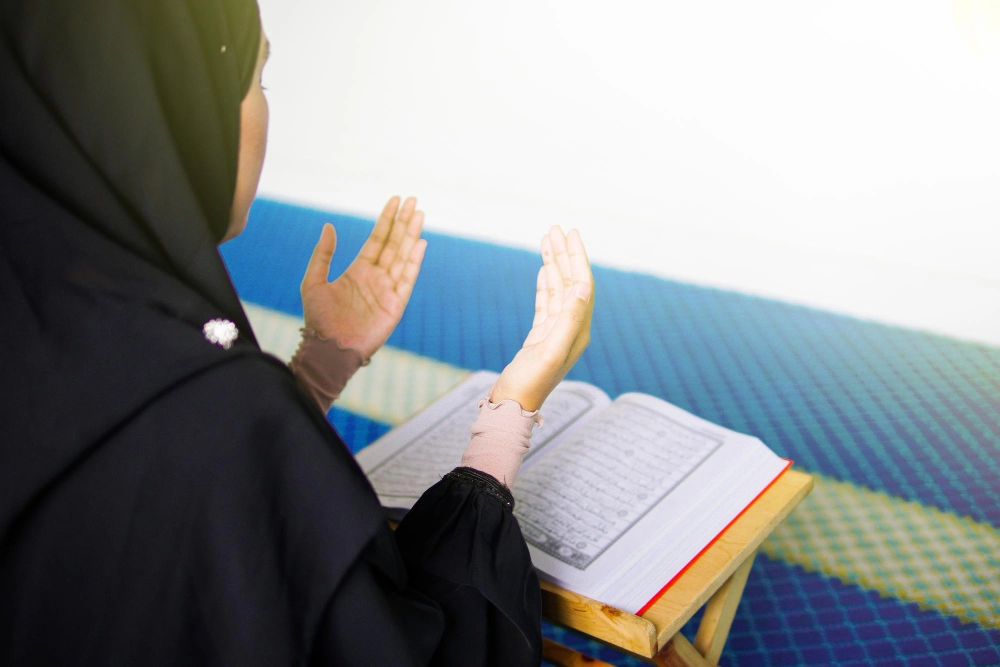
5. Increasing Supplication (Du‘a)
Ramadan is a very special time for supplication, especially for those who are fasting. Abu Hurairah radhiallahu ‘anhu narrated that the Messenger of Allah Shallallahu `alaihi wa sallam said:
“There are three whose supplications are not rejected: the supplication of a fasting person until he breaks his fast, the supplication of a just leader, and the supplication of the oppressed.” (HR. At-Tirmidzi, Ibnu Hibban, authenticated by Imam Al-Baihaqi)
6. Qiyam Ramadan (Tarawih and Other Night Prayers)
Tarawih and other night prayers in Ramadan carry great virtue and immense reward. Abu Hurairah radhiallahu ‘anhu narrated that the Messenger of Allah Shallallahu `alaihi wa sallam said:
“Whoever stands in prayer during Ramadan out of faith and seeking reward, his past sins will be forgiven.” (HR. Bukhari No. 37, Muslim No. 759)
7. Avoiding Deeds that Damage the Fast
Fasting is not only about refraining from food and drink, but also about avoiding actions that can diminish its reward, such as backbiting (ghibah), slander (namimah), following lustful desires (rafats), gambling, and other sinful acts. Abu Hurairah radhiallahu ‘anhu narrated that the Messenger of Allah Shallallahu `alaihi wa sallam said:
“How many people fast and gain nothing from their fasting except hunger.” (HR. Ahmad, Ibnu Majah, Ad-Darimi)
8. Hastening to Break the Fast
One of the sunnah practices in Ramadan is hastening to break the fast before the Maghrib prayer. The Messenger of Allah Shallallahu `alaihi wa sallam recommended breaking the fast with dates, and if none are available, then with water. He said:
“When one of you is fasting, let him break his fast with dates. If he does not find dates, then with water, for indeed water is purifying.” (HR. Abu Dawud)
The sunnah order is: fresh dates (ruthab), then dried dates (tamar), and if none are available, then water. If only honey or milk is available, honey is preferred because it is sweeter and carries the value of sunnah. Hastening to break the fast preserves the blessing and completeness of fasting.
9. Performing Umrah
Performing ‘umrah in the month of Ramadan has extraordinary virtue, with a reward equivalent to performing Hajj with the Messenger of Allah Shallallahu `alaihi wa sallam. Ibn ‘Abbas radhiallahu ‘anhuma narrated that the Prophet said to an Ansari woman named Umm Sinan:
“Indeed, an ‘umrah in Ramadan is equal to a Hajj, or a Hajj with me.” (HR. Bukhari No. 1863, Muslim No. 1256)
10. I‘tikaf
I‘tikaf, which is staying in the mosque for worship, is a highly recommended sunnah practice in the last ten days of Ramadan. The Prophet Shallallahu `alaihi wa sallam consistently performed i‘tikaf during the last ten nights until his death, and his wives continued this practice after him.
“Indeed, the Prophet Shallallahu `alaihi wa sallam used to perform i‘tikaf in the last ten days of Ramadan until he passed away, then his wives performed i‘tikaf after him.” (HR. Bukhari, Muslim, Abu Dawud, Ahmad)
These are some of the sunnah practices in Ramadan that you can perform to increase your rewards and draw closer to Allah Subhanahu wa ta'ala. Through these acts, Ramadan becomes the perfect moment to strengthen faith and spread goodness.
In addition to increasing acts of worship, if you have needs that you wish to fulfill in a sharia-compliant way, BFI Finance Syariah is ready to assist you. Through its Sharia Financing services under the Sharia Business Unit (UUS), BFI Finance Syariah offers financial solutions with trustworthy processes in accordance with Islamic principles, whether for additional business capital or the procurement of goods and services.
Make the most of this opportunity to experience a more meaningful Ramadan while fulfilling your needs wisely. Together with BFI Finance Syariah, realize your goals with #JauhLebihTenang.