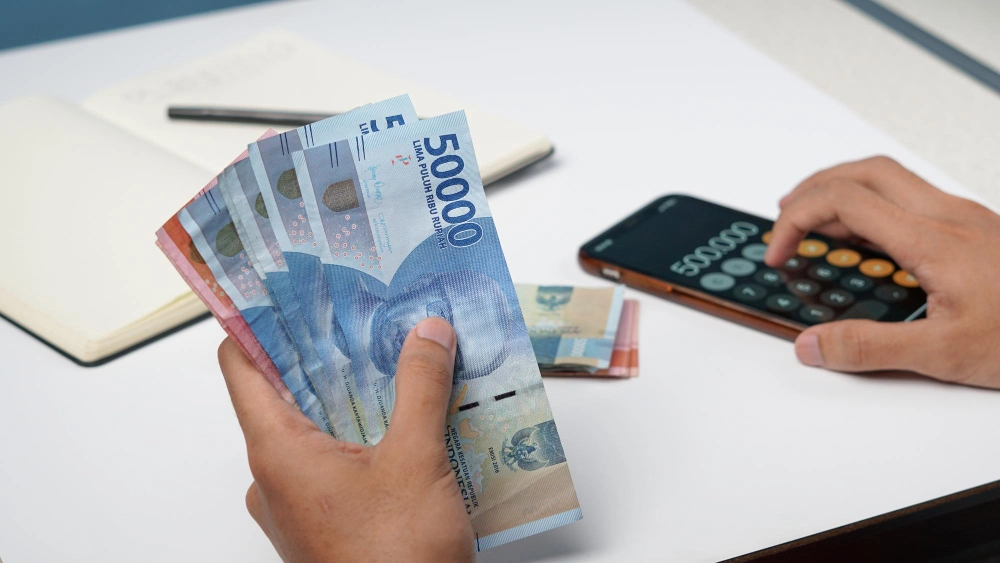
When planning to buy a house, car, or electronic devices on credit, one common question that often arises is about the down payment (DP). Knowing the required DP from the start helps you plan your installments and manage your finances more effectively.
However, many people still wonder: what percentage is the ideal DP to keep installments affordable? To find out the answer, let’s take a closer look at the following article.
What Is a Down Payment (DP)?
DP stands for down payment, which refers to an upfront payment made when purchasing goods or services through credit. In other words, a down payment is the initial amount paid before monthly installments begin and is part of the total purchase price that must be settled by the buyer.
The DP method is commonly used to make high-value purchases more manageable. By paying a down payment, buyers can also secure the availability of limited items so they are not taken by other parties.
Down payments are typically applied to the purchase of electronic goods, property assets, and vehicles. The DP amount varies depending on agreements and the type of asset being purchased and is usually expressed as a percentage, such as 5%, 10%, 15%, or 20%.
What Percentage Is a Down Payment Usually?
In Indonesia, the required down payment varies depending on the type of financing (property, vehicles, or electronics), financial institution policies, and government regulations such as the Loan-to-Value (LTV) or Financing-to-Value (FTV) ratio. Here are the details:
-
Home Mortgage (KPR): The DP typically ranges from 15%–30% of the total house price, depending on the property type and Bank Indonesia regulations.
-
Motor Vehicle Financing: The minimum DP is generally around 15%–25% for motorcycles and 20%–30% for cars, in accordance with LTV/FTV requirements.
-
0% DP Relaxation (Stimulus Program): Bank Indonesia has introduced a 0% down payment policy for vehicle loans as an economic stimulus. For example, this policy is valid until December 31, 2025, provided that banks and financial institutions meet the required risk assessment criteria.
For non-bank financing institutions, DP requirements may differ. Some non-bank mortgage providers set a minimum DP of 20%, depending on the asset type and each institution’s internal policy.
Types of Down Payments
Down payments can be categorized based on their conditions. Below are several commonly used types of DP:
-
Fixed Down Payment: As the name suggests, this DP is set at a fixed nominal amount, such as IDR 5 million or IDR 10 million, regardless of the item’s total price. This type is usually based on an agreement between the seller and the buyer.
-
Flexible Down Payment: A DP whose amount can be negotiated between the buyer and the seller or financial institution, depending on financial capability and applicable policies.
-
0% Down Payment: This option allows buyers to obtain financing without paying any upfront payment, depending on promotional offers or government stimulus policies.
-
Subsidized Down Payment: A DP that is partially or fully covered by another party, such as the government or a property developer, reducing the buyer’s initial financial burden. An example is a down payment assistance program for home purchases.
How Does a Down Payment Work?
Since a DP is an upfront payment made when purchasing goods or services on credit, it must be paid before installment calculations begin. After the DP is paid, the remaining balance is repaid in installments according to the agreed tenor or repayment period.
For example, if you buy a house priced at IDR 500 million with a 20% DP, you must pay IDR 100 million upfront. The remaining IDR 400 million is then paid in monthly installments based on the agreed tenor with the bank or financial institution.
In summary, the general steps of how a DP works are as follows:
-
Determine the price of the item or asset to be purchased
-
Set the DP amount as a percentage or fixed nominal value
-
Pay the DP as an upfront payment
-
Calculate the remaining balance
-
Pay monthly installments according to the agreed tenor
Benefits of Paying a Down Payment
Before purchasing items on credit and paying a DP, it’s important to understand the benefits. Here are some advantages you can gain:
1. Lower Interest Rates
Paying a larger DP usually results in lower interest rates or financing margins. This is because the lender’s risk is reduced, making monthly installments more affordable and lowering the total loan cost.
2. Installments That Fit Your Budget
With a DP, the remaining loan amount becomes smaller. This leads to lighter monthly installments that are more flexible and aligned with your financial capacity.
3. More Funds for Other Needs
Paying a DP helps you manage reserve funds for other expenses. Knowing the DP amount in advance allows you to better plan monthly finances and avoid financial strain from large installments and interest.
4. Faster Asset Ownership
A larger DP can help you secure and own your desired asset more quickly. The upfront payment often streamlines administrative and credit approval processes, accelerating asset ownership.
Examples of Down Payment Applications
For instance, if you plan to buy a house worth IDR 500 million with a 20% DP, you pay IDR 100 million upfront, while the remaining IDR 400 million is paid in monthly installments. A larger DP results in lighter monthly payments.
Another example: if you want to purchase a car priced at IDR 300 million with a 15% DP, you pay IDR 45 million upfront, and the remaining IDR 255 million is paid in installments. This DP helps secure the car and reduce monthly financial.
For electronic goods, such as a laptop priced at IDR 20 million with a 10% DP, you must pay IDR 2 million upfront, with the remaining IDR 18 million paid in installments. This approach helps you secure the item while managing your finances more effectively.
That’s an overview of how much a down payment is usually, covering its definition, how it works, and the factors influencing DP amounts. Hopefully, this explanation helps you plan credit-based asset purchases more wisely.
If you’re planning to own your dream home or purchase goods with affordable installments, make sure to choose financing that matches your financial condition. BFI Finance offers trusted financing solutions to help make it happen.
You can apply for financing using Motorcycle BPKB, Car BPKB, or Property Certificates (House, Shop House, or Office House) for various personal and business needs, such as asset purchases, home renovations, or starting a new business.
All BFI Finance services are licensed and supervised by the Financial Services Authority (OJK), ensuring secure and reliable transactions. With over 40 years of experience, BFI Finance is ready to support your financial needs with professional service.
Make your dreams a reality today without hesitation—because there is #AlwaysAWay with BFI Finance.