Electric cars are no longer just a symbol of eco-friendly living—they are also high-value assets increasingly sought after by consumers. As this trend grows, financing companies are now offering loan options using electric car ownership documents (BPKB) as collateral.
Before applying for an electric car collateral loan, it’s important to understand the requirements to ensure a smooth approval process. Here’s a complete guide.
Why Electric Cars Are Valuable Assets
Electric vehicles (EVs) are widely adopted as sustainable transportation solutions. Beyond environmental benefits, they also offer strong economic value. Here are the key advantages:
1. Strong Resale Value
Electric cars can be considered solid investment assets, with relatively stable resale value—especially when market demand is high. However, value is still influenced by factors such as condition, brand, and technology.
2. Rapid Technological Advancement
EV technology continues to evolve, making vehicles more energy-efficient, environmentally friendly, and comfortable. This ongoing innovation enhances their long-term asset value.
3. Lower Operating Costs
With rising fuel prices, EVs offer significant savings by relying on electricity, which is generally more affordable and less volatile than fossil fuels. Maintenance is also simpler, as EVs don’t require routine oil changes or complex engine servicing—leading to long-term cost efficiency.
4. Tax Incentives and Benefits
Governments actively promote EV adoption through incentives such as tax reductions, subsidies, and vehicle tax exemptions. In Indonesia, electric vehicles may receive partial or full exemptions on motor vehicle tax (PKB), depending on regional policies.
5. Environmentally Friendly
Growing environmental awareness is driving demand for EVs. With lower carbon emissions, electric cars appeal to individuals who want to contribute to sustainability—adding both economic and ecological value.
Risks to Consider
Despite their advantages, electric cars also come with risks—most notably depreciation. While resale value tends to be stable, it can still decline due to factors such as:
-
The release of newer, more affordable models
-
Battery performance degradation over time
This depreciation can impact the vehicle’s loan-to-value (LTV) ratio if used as collateral. Maintaining your vehicle in optimal condition is essential to preserve its value and maximize your potential loan amount.
Electric Car Collateral Loans at BFI Finance
Keeping your electric car in excellent condition is not only important for daily use but also for maintaining its value as a financial asset. When you need funds, you can leverage this asset without selling it.
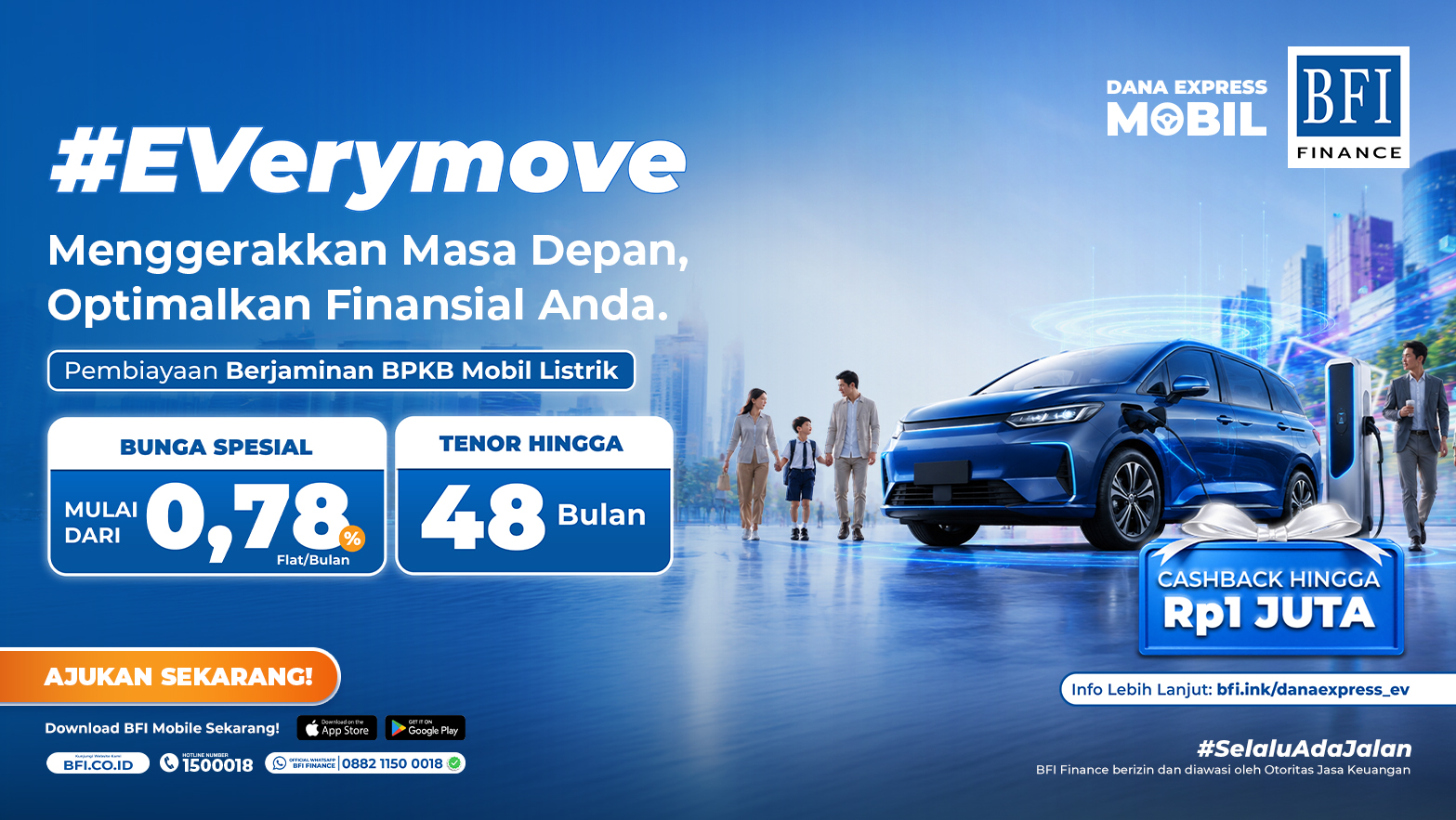
BFI Finance offers loans using electric car BPKB as collateral, allowing you to access funds while still using your vehicle. Key benefits include:
-
Competitive interest rates, starting from 0.76% flat per month
-
Flexible tenors of up to 36 months
-
Continued vehicle usage, as only the ownership document (BPKB) is held by the lender
Requirements for Electric Car Collateral Loans
To apply, you need to meet several criteria, including general eligibility, vehicle requirements, and supporting documents.
1. General Requirements
-
New or existing BFI Finance customers
-
Indonesian citizen (WNI)
-
Aged 21–65 years (at loan maturity)
-
Applicants aged 18–21 must be married and have income
-
Residence must belong to self, spouse, parents, or family within one household (KK)
-
Open to most professions, except those restricted under AML/CFT and OJK regulations
-
Loan amount up to 70% of vehicle value
2. Vehicle Criteria
-
Original BPKB available
-
Ownership under applicant, spouse, or family in the same household
-
Maximum vehicle age: 6 years (sedan, jeep, minibus, double cabin)
-
Not a government (red plate) vehicle
-
Not previously used as a taxi or ambulance
3. Required Documents
-
Personal documents: ID card (KTP), Family Card (KK), Tax ID (NPWP)
-
Electricity account number or latest utility bill
-
Proof of residence ownership (self/family)
-
Property documents (PBB, SHM, AJB)
-
Vehicle documents: STNK, BPKB, tax proof, invoice
-
Income documents:
-
Employees: Payslip, employment letter, bank statements (last 3 months)
-
Entrepreneurs: Business invoices, bank statements (last 3 months), business permits (SIUP/TDP), business certificate/deed
-
Electric car collateral loans can be a practical financial solution when managed wisely. By maintaining your vehicle’s condition and preparing the required documents, you can maximize your loan potential.
With proper planning, electric cars are not only eco-friendly transportation but also valuable financial assets that can support urgent needs at any time.
BFI Finance provides flexible financing solutions with competitive rates, not only for electric car BPKB but also for motorcycle BPKB and property certificates. As a licensed and OJK-supervised financing company, BFI Finance is committed to helping you achieve your financial goals through a simple and efficient application process.
Make the most of your electric car asset—because there’s always a way forward with BFI Finance.