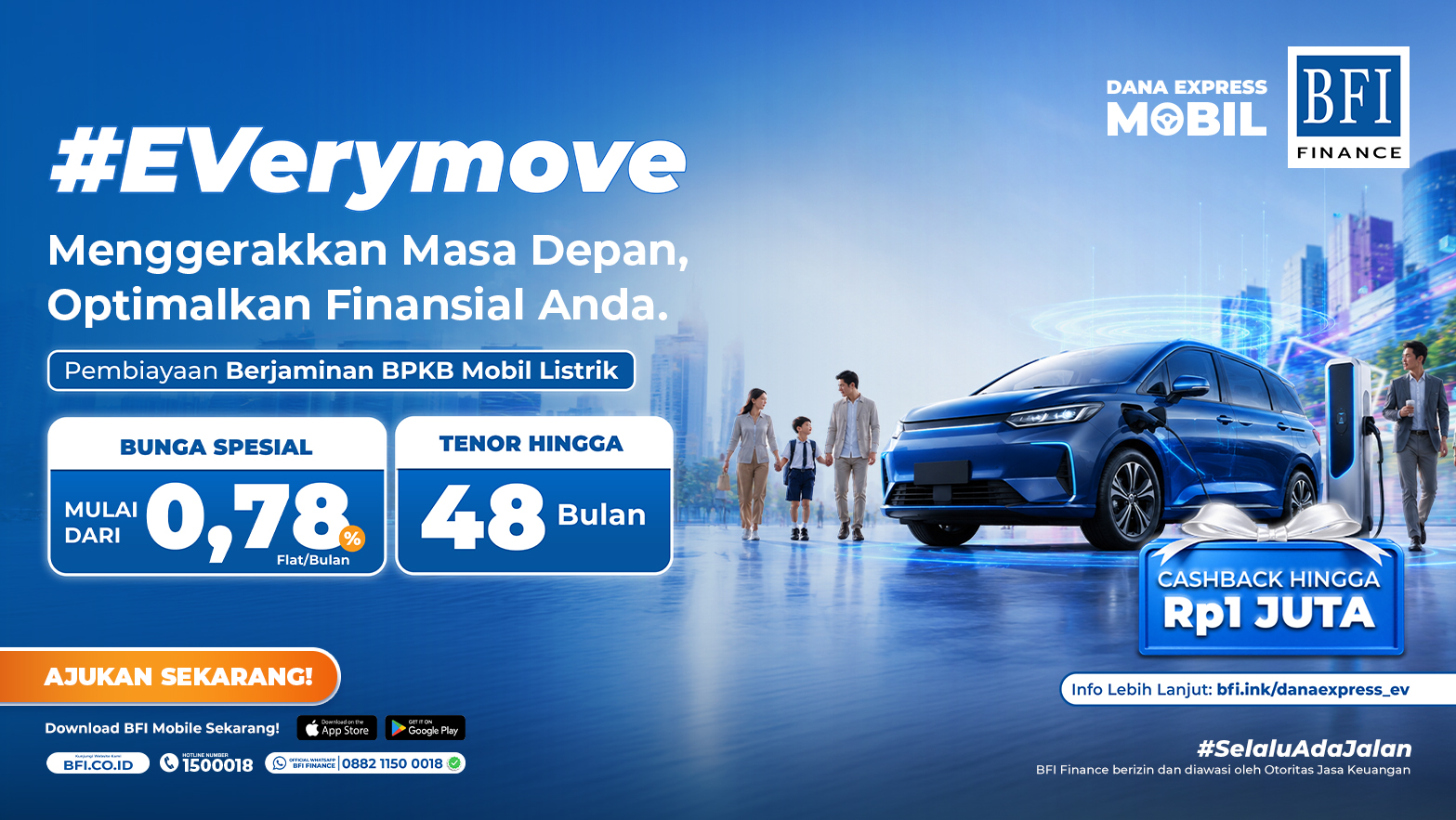
Getting your hands on extra cash used to mean choosing between a handful of predictable options: a bank personal loan, an online lending app, or a collateral-backed loan like the ones offered by BFI Finance. These days, though, the landscape has expanded. BFI Finance recently rolled out a new financing product: BPKB-backed loans for electric vehicles (EVs). As EV ownership continues to climb across Indonesia, owners now have a fresh way to put that asset to work as a source of funding.
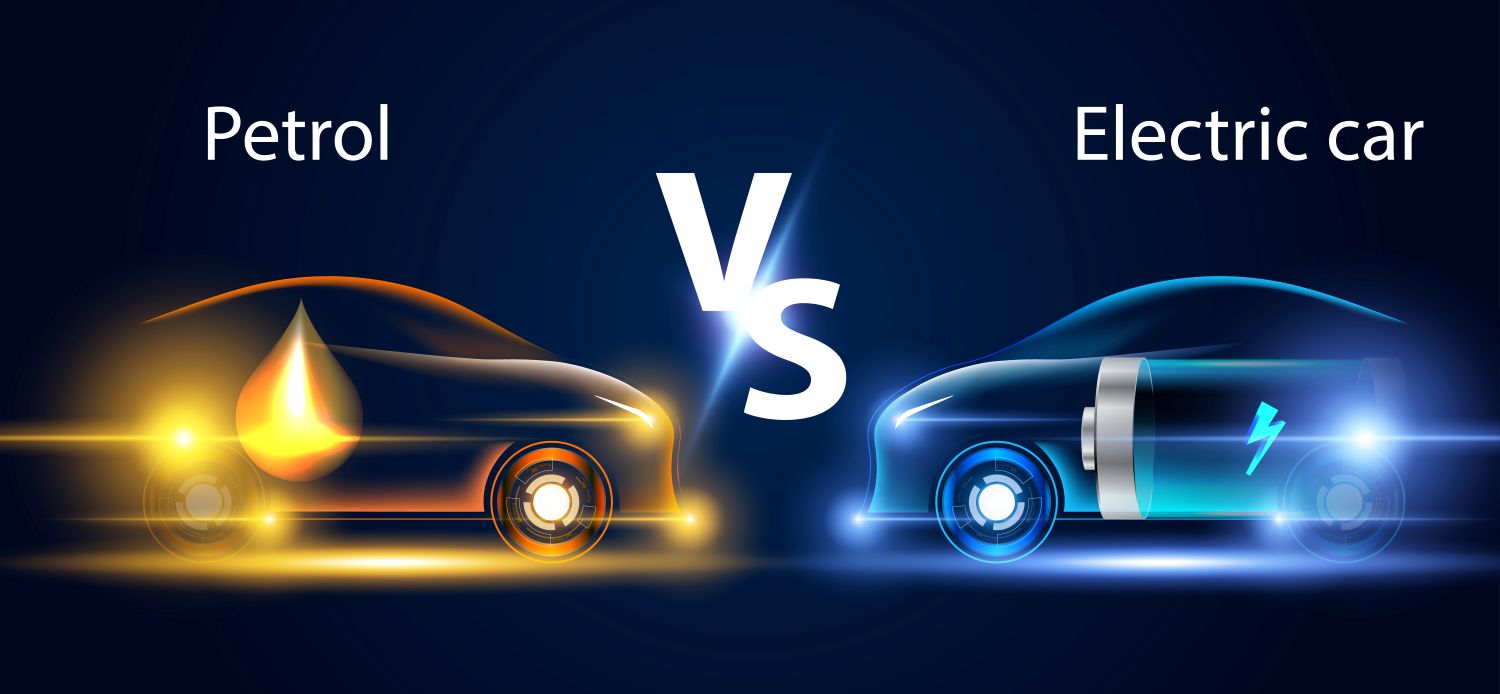
This article won't dwell on the perks of an EV-backed loan on its own. Instead, we're putting it head-to-head with its gasoline-powered counterpart. What actually separates a BPKB loan secured by an electric car from one secured by a conventional car? Is an EV loan the smarter pick? Read on to find the answers and choose the financing option that best fits your situation and needs.
What Is a BPKB Car Loan?
Before diving into the differences, let's start with the basics. A BPKB car loan is a financing facility with a set disbursement limit that uses your vehicle ownership certificate (BPKB) as collateral. The best part? You keep driving your car throughout the loan term — handing over the BPKB doesn't mean handing over the keys.
Loan amounts vary widely, from a few million rupiah up to the billions, depending on your needs, your vehicle's profile, and an assessment of your own borrower profile. Whatever the reason — daily expenses, business capital, tuition fees, home renovation, or an unexpected emergency — a BPKB car loan can be a flexible way to unlock funds without selling the vehicle you rely on.
EV vs. Gasoline Car BPKB Loans: Where They Differ
Electric and gasoline cars aren't just different in how they run — they diverge in features, energy source, resale value, and more. Naturally, those differences carry over into how each vehicle is assessed and validated during the loan application process. So what exactly sets an EV-backed BPKB loan apart from a gasoline-backed one at BFI Finance? Here's the full breakdown.
a. Vehicle Appraisal Process
Appraisal is the stage where a financing company like BFI Finance inspects and estimates the market value of the vehicle being pledged as collateral. This step confirms the car's physical condition, verifies that all documents are complete, and ultimately determines how much loan ceiling the borrower can access. It's typically carried out by a surveyor, either through an in-person visit or via photos and videos submitted by the applicant, depending on the financing company's policy.
For electric vehicles, the battery is always the star of the show, which means it gets scrutinized closely. Surveyors check the battery's remaining capacity, look for any signs of damage, and review its repair or replacement history.
Gasoline-powered cars, on the other hand, are evaluated differently. Beyond checking that the paperwork is complete, surveyors focus on the interior and exterior condition, tire wear, the odometer reading, and whether the car has any history of flood damage.
b. Loan Ceiling
At BFI Finance, the loan ceiling is one of the clearest differentiators between EV and gasoline car financing. For electric vehicles, disbursement ranges from Rp10 million up to 80% of the car's appraised value. For gasoline vehicles, borrowers can access disbursement from Rp10 million up to 90% of the car's value.
c. Interest Rate
BFI Finance's EV-backed BPKB loan comes with an interest rate starting from 0.78% per month, or 9.36% per year. Conventional gasoline car loans start slightly lower, from 0.76% per month, or 9.2% per year.
d. Vehicle Age
One of the most noticeable differences between EV and gasoline car loans is the age limit for eligible vehicles. For electric cars, BFI Finance caps eligibility at a maximum vehicle age of 4 years from the year of manufacture. This tighter window ties directly back to the battery — the single most critical component in an EV — since battery performance naturally degrades over time. The younger the vehicle, the better-preserved the battery, and the more solid the collateral value.
Gasoline-powered cars enjoy a far more generous age range: up to 20 years (minimum year of manufacture 2006) for sedans, jeeps, and minivans, and up to 13 years (minimum year of manufacture 2013) for pickups and trucks. That extra breathing room is possible because conventional engines follow a more predictable depreciation curve and, with regular maintenance, can keep performing reliably even after many years on the road.
e. Online Application
Both EV and gasoline car BPKB loans can be applied for online — the only difference is the channel. EV loan applications go through WhatsApp: reach out to BFI Finance's official EV loan WhatsApp line at 0818810806 for more information and to kick off the process. Gasoline car loan applications, meanwhile, run through an online form via the [Online Car Loan Application Form].
Aside from these differences, both EV and gasoline car BPKB loans share the same standout perks: loan terms of up to 48 months and full disbursement with no deductions.
Comparison Table: EV vs. Gasoline Car BPKB Loans
| Category |
EV BPKB Loan |
Gasoline Car BPKB Loan |
|
Vehicle Appraisal |
Battery condition and capacity, document completeness and authenticity, interior/exterior condition, vehicle age, vehicle status, etc. |
Document completeness and authenticity, interior/exterior condition, vehicle age, vehicle status, etc. |
|
Loan Ceiling |
From Rp10 million up to 80% of vehicle value |
From Rp10 million up to 90% of vehicle value |
|
Interest Rate |
From 0.78% per month (9.36% per year) |
From 0.76% per month (9.2% per year) |
|
Vehicle Age |
Maximum 4 years |
Maximum 20 years for sedans, jeeps, and minivans; maximum 13 years for pickups and trucks |
|
Online Application |
Via official WhatsApp line: 0818810806 |
Via online car loan application form |
Required Documents for EV and Gasoline Car BPKB Loans
Before applying for either an EV or gasoline car BPKB loan, there's a set of requirements to meet — covering your personal profile, your vehicle's profile, and the supporting documents. Here's what you'll need.
1. Personal Profile Requirements
- Indonesian citizen (WNI).
- Aged 21–60, whether single, married, or divorced.
- Applicants aged 18–21 must have a steady income and be married.
- Have a place of residence — whether owned, a spouse's or family's property, or a valid annual rental.
- Employed as a permanent or contract employee, a civil servant (PNS), or self-employed.
- Not engaged in any unlawful business or profession.
2. Required Documents
- Applicant's ID card (KTP), plus spouse's ID if married.
- Family Card (KK).
- Electricity bill or property tax (PBB) statement.
- Proof of income:
- Employees: pay slip, employment certificate, and 3 months of bank statements.
- Self-employed: business invoices/bookkeeping, 3 months of bank statements, and business licenses (SIUP/TDP/SKU/Akte).
- Vehicle registration (STNK).
- BPKB and vehicle invoice.
3. Vehicle Profile Requirements
- The vehicle must be self-owned with an original BPKB.
- The BPKB can be under the applicant's own name, a spouse's, or another party's (with proof of purchase).
- A company-registered BPKB is allowed for gasoline vehicles with a Letter of Release of Rights (SPH). For EVs, only privately owned vehicles qualify — no fleet/government-plated vehicles, and no former taxis, rentals, or ambulances.
- For gasoline vehicles: maximum age of 20 years for sedans, jeeps, and minivans (minimum year 2005); maximum 13 years for pickups and trucks (minimum year 2012). For EVs: maximum age of 4 years.
- Active vehicle registration (STNK) and tax payments up to date.
- EVs specifically must be from a brand and model on BFI Finance's approved list, including BYD, Hyundai, Wuling, Aion, Chery, Denza, Geely, Jaecoo, and MG.
- EVs are also subject to mileage and tenor limits based on age:
- 1 year old: max. 25,000 km, loan term up to 4 years
- 2 years old: max. 50,000 km, loan term up to 4 years
- 3 years old: max. 75,000 km, loan term up to 3 years
- 4 years old: max. 100,000 km, loan term up to 2 years
Loan Simulation: EV vs. Gasoline Car
EV BPKB loan simulations start from Rp10 million up to 80% of the vehicle's value, with loan terms ranging from 12 to 48 months. For example, pledging a 2024 Wuling Air EV Long Range could get you a loan of up to Rp100 million. Monthly installments will vary based on the loan amount and chosen term.
Electric Car BPKB Loan Simulation
|
Loan Amount |
Simulation using a 2024 Wuling Air EV Long Range |
||
|
12 month |
24 month |
36 month |
|
|
50,000,000 |
4,676,500 |
2,498,000 |
1,764,500 |
|
55,000,000 |
5,103,500 |
2,714,000 |
1,911,000 |
|
60,000,000 |
5,530,500 |
2,930,000 |
2,057,000 |
|
65,000,000 |
5,958,000 |
3,147,000 |
2,203,500 |
|
70,000,000 |
6,385,000 |
3,363,500 |
2,349,500 |
|
75,000,000 |
6,812,000 |
3,580,000 |
2,496,000 |
|
80,000,000 |
7,239,000 |
3,796,500 |
2,642,000 |
|
85,000,000 |
7,666,000 |
4,013,000 |
2,788,500 |
|
90,000,000 |
8,093,000 |
4,229,500 |
2,934,500 |
|
95,000,000 |
8,520,000 |
4,446,000 |
3,081,000 |
|
100,000,000 |
8,947,500 |
4,662,000 |
3,227,000 |
Disclaimer: The figures above are estimates only. Actual installment amounts may vary based on the appraised collateral and the borrower's profile assessment.
Gasoline car BPKB loan simulations start from Rp10 million up to 90% of the vehicle's value, also with loan terms from 12 to 48 months. For example, pledging a 2024 Toyota All New Avanza Veloz-VVTI 1.5AT could get you a loan of up to Rp100 million.
Gasoline Car BPKB Loan Simulation
|
Loan Amount |
Simulation using a 2015 Toyota All New Avanza Veloz-VVTI 1.5 AT |
||
|
12 month |
24 month |
36 month |
|
|
50,000,000 |
5,189,500 |
2,984,000 |
2,282,000 |
|
55,000,000 |
5,680,500 |
3,262,500 |
2,491,500 |
|
60,000,000 |
6,171,500 |
3,540,500 |
2,701,500 |
|
65,000,000 |
6,662,500 |
3,818,500 |
2,911,000 |
|
70,000,000 |
7,135,500 |
4,096,500 |
3,121,000 |
|
75,000,000 |
7,644,500 |
4,374,500 |
3,330,500 |
|
80,000,000 |
8,164,000 |
4,668,500 |
3,552,500 |
|
85,000,000 |
8,655,000 |
4,946,500 |
3,762,500 |
|
90,000,000 |
9,146,000 |
5,224,500 |
3,972,000 |
|
95,000,000 |
9,367,000 |
5,502,500 |
4,182,000 |
|
100,000,000 |
10,128,000 |
5,780,500 |
4,391,500 |
Disclaimer: The figures above are estimates only. Actual installment amounts may vary based on the appraised collateral and the borrower's profile assessment.
So, Which One Is More Worth It?
It really comes down to your needs and your financial readiness. Electric and conventional cars each bring their own set of trade-offs to the table as collateral. Looking purely at loan ceiling, conventional (gasoline/diesel) cars generally hold an edge over EVs. That's largely because the used-car market for combustion-engine vehicles in Indonesia is far more established, giving them more stable resale value. EVs, by contrast, are still a relatively new category in the local automotive market — their depreciation tends to move faster and is harder to predict, driven in large part by the battery, which remains the single biggest factor in determining resale value.
That said, EVs aren't without their own advantages. When it comes to running costs and upkeep, electric vehicles have the clear edge — no fuel expenses, no oil changes, no conventional engine servicing. If you're already using your EV as your daily driver and are considering a BPKB loan, those long-term savings are worth factoring in, even if they don't directly boost your loan ceiling.
At the end of the day, the right choice depends on your vehicle's condition, how much funding you need, and each financing company's specific policies for assessing BPKB collateral. Before applying, take the time to fully understand the terms, conditions, and disbursement estimates so the process goes smoothly and matches what you actually need.
Need fast cash with your car's BPKB as collateral — electric or conventional? BFI Finance is ready to help, with a process that's simple, quick, and trustworthy. Apply online or in person at any of our hundreds of branches and points of sale across Indonesia. With over 40 years of experience serving the financial needs of Indonesians, BFI Finance continues to be a partner you can count on for your financing solutions. #SelaluAdaJalan with BFI Finance. BFI Finance is licensed and supervised by Indonesia's Financial Services Authority (OJK).
Apply for your car BPKB-backed loan with BFI Finance today.