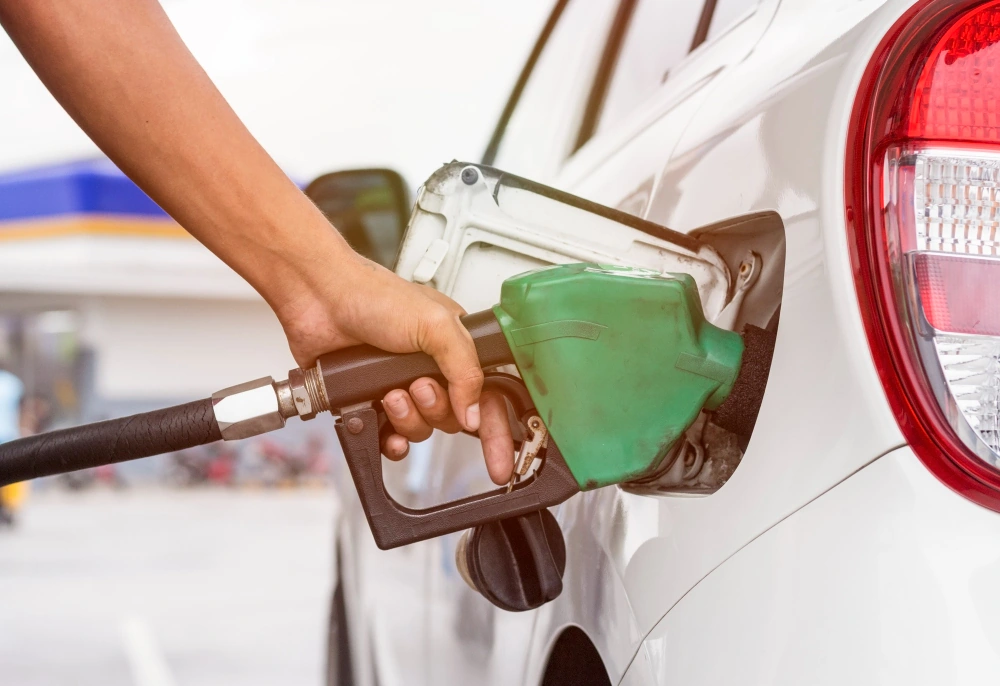
Calculating fuel consumption may sound like a simple task, but it plays a crucial role in helping you manage your monthly expenses while keeping your vehicle running at peak performance.
Unfortunately, many drivers still haven't made fuel tracking a regular habit — even though knowing how far your vehicle can travel on just 1 liter of fuel comes with a wealth of practical benefits.
Let's break down how to calculate fuel consumption accurately so you can take better control of your finances!
Why Should You Calculate Fuel Consumption?
Tracking your fuel consumption offers a range of practical benefits for everyday life. Here are some of the most important ones:
1. Control Your Fuel Spending More Accurately
By knowing your vehicle's actual fuel consumption, you can estimate your monthly transportation costs with greater precision — rather than relying solely on manufacturer figures.
2. Plan Long-Distance Trips More Effectively
When tackling a new route, calculating fuel consumption helps you estimate how much fuel you'll need and determine the best time to refuel along the way.
3. Estimate Your Vehicle's Travel Range
For example, if you know that a Honda BeAT motorcycle has a tank capacity of approximately 4.2 liters, you can predict how far it will take you before your next fill-up.
4. Monitor Your Vehicle's Condition and Performance
A sudden spike in fuel consumption could be an early warning sign of an engine or mechanical issue. Without regular fuel tracking, you risk unknowingly wasting money — or worse, running out of fuel far from the nearest gas station.
The Basic Formula for Calculating Fuel Consumption
Calculating fuel consumption is actually quite straightforward. There are two commonly used formulas, each serving a different purpose:
1. Fuel consumption per kilometer = Total liters of fuel used ÷ Distance traveled (km)
2. Fuel consumption per liter (km/liter) = Distance traveled (km) ÷ Total liters of fuel used
Example: Say your vehicle travels 120 km using 2 liters of fuel. Here's how the calculation works:
- Consumption per kilometer = 2 ÷ 120 = 0.017 liters/km
- Consumption per liter = 120 ÷ 2 = 60 km/liter
The km/liter figure is the more commonly used indicator, as it gives a clearer and more intuitive picture of your vehicle's fuel efficiency.
How to Calculate Fuel Consumption: The Full-to-Full Method
For the most accurate results, use the full-to-full method — a widely trusted approach known for its precision and simplicity. Here's how to do it step by step:
- Fill up completely at the start. Top up your tank until it's completely full, then note your odometer reading or reset the trip meter.
- Drive as you normally would. There's no need to change your driving habits — use your vehicle for your regular daily activities to get results that reflect real-world conditions.
- Fill up again until full. After some time or distance, refuel until the tank is full again and record exactly how many liters were added.
- Calculate the total distance traveled. Subtract your initial odometer reading from the final reading to get the total distance covered.
- Apply the formula: Fuel Consumption = Distance traveled ÷ Liters added during the second fill-up.
Factors That Affect Fuel Consumption
Calculating fuel consumption is just one piece of the puzzle — understanding what influences it is equally important. Here are the key factors to keep in mind:
- Driving style. Aggressive driving habits such as sudden braking or rapid acceleration significantly increase fuel usage. Smooth, steady driving, on the other hand, boosts efficiency.
- Vehicle condition and maintenance. A poorly maintained engine, dirty air filter, or worn-out spark plugs can lead to incomplete combustion, driving up fuel consumption.
- Tire pressure. Under-inflated tires increase rolling resistance, forcing the engine to work harder and use more fuel.
- Vehicle load. The heavier the load, the more power the engine needs — and the more fuel it burns.
- Transmission type. Manual vehicles are generally more fuel-efficient than automatics, particularly on open roads, as drivers can optimize gear shifts.
- Vehicle size and type. Compact vehicles tend to be more economical than larger ones like SUVs or MPVs, which carry more weight and require more power.
- Fuel type selection. Using the correct fuel grade for your engine is essential. Mismatched octane levels can reduce both efficiency and performance.
Calculating fuel consumption goes far beyond crunching numbers — it's a smart financial habit that helps you budget wisely and avoid unexpected expenses. By understanding your vehicle's fuel usage patterns, you can plan your spending more effectively and stay ahead of any surprises.
Beyond setting aside a regular budget for fuel, it's equally important to stay prepared for other financial needs. Even with careful planning, large and urgent expenses can arise at any time. If you ever find yourself in that situation, BFI Finance is here to help.
You can access financing solutions from BFI Finance using collateral such as a motorcycle BPKB, car BPKB, or property certificate. BFI Finance is officially licensed and supervised by the Financial Services Authority (OJK). So don't hesitate to address your most pressing financial needs — because #ThereIsAlwaysAWay with BFI Finance.