Envelope budgeting is a simple method of managing money by dividing expenses into several categories. In this method, each category has a spending limit, allowing you to control where your money goes and keep your financial records more organized.
If you want to better understand what envelope budgeting is and how to apply it in daily financial management, read the full explanation in this article.
What Is Envelope Budgeting?
Envelope budgeting is a financial management method that involves dividing money into several expense categories using envelopes. This approach has been used for a long time, even before online transfers, mobile banking, or digital finance apps existed.
In envelope budgeting, each envelope represents a specific type of expense, such as food, transportation, or entertainment. This method helps you clearly see how much money is available for each need.
How Envelope Budgeting Works
To apply envelope budgeting effectively, there are several steps you need to follow. Each step helps you manage income and expenses according to your plan.
1. Calculate Your Monthly Net Income
Start by calculating your monthly net income, which is the amount you receive after all deductions. If your income varies, use the lowest amount you typically earn. This helps you create a safer budget and avoid overestimating your spending.
2. Define Expense Categories
Separate your expenses into categories, both fixed and variable. Common categories include housing, utilities, groceries, transportation, insurance, debt payments, savings, and additional expenses such as entertainment.
If you frequently spend money on a certain need, include it in your budget. Create a realistic list to make financial planning easier.
3. Allocate Money to Each Category
Determine how much money to allocate to each envelope based on your expense categories. The total amount distributed across envelopes should equal your total income. This step helps you set priorities. If you increase the budget in one category, you need to reduce it in another to maintain balance.
4. Put Funds into Each “Envelope”
After deciding the amount for each category, the next step is to allocate funds into each “envelope.” You can do this by withdrawing cash and separating it into envelopes based on expense categories.
Alternatively, you can apply this method digitally by creating sub-accounts in your bank or tracking your budget through financial apps. The key is that each category’s funds are separated from the beginning.
5. Spend Within the Limits
If your food budget envelope contains $400, you should not spend $450 in that category. If you need to spend more, you must take funds from another category. This approach makes you more aware of spending limits and helps you make clearer financial decisions.
Why Is Envelope Budgeting Important?
Many people find it difficult to manage budgets because numbers in spreadsheets often feel abstract in daily practice. Envelope budgeting addresses this by providing clear and tangible spending limits for each category.
This method increases awareness of spending habits since each category has a predefined budget. As a result, the risk of overspending or impulsive purchases becomes easier to control.
Envelope budgeting also simplifies decision-making when shopping. You don’t need to constantly question whether you can afford something—the limits in each category already provide the answer.
Advantages of Envelope Budgeting
Envelope budgeting offers several benefits that make it a popular financial management method:
- Easy to understand: Its simple approach makes it easy to apply, even for beginners.
- Encourages spending discipline: Each category has a set limit, helping you stick to your budget plan.
- Prevents overspending: Separating funds by category helps ensure expenses stay within limits.
- Improves financial awareness: You can clearly see where your money goes each month.
- Suitable for stable income: This method works best if your income is relatively consistent each month.
Disadvantages of Envelope Budgeting
Despite its benefits, there are some limitations to consider:
- Can feel restrictive: Spending limits may feel too limiting for some people.
- Requires consistent tracking: You need to regularly monitor expenses to stay within budget.
- Needs periodic adjustments: Budget allocations may need changes as your monthly needs evolve.
- Cash-based system can be impractical: Using physical envelopes may feel inconvenient in daily use.
Even so, the success of envelope budgeting depends on consistency. It doesn’t require perfection but helps you maintain controlled spending habits over time.
Example of Envelope Budgeting
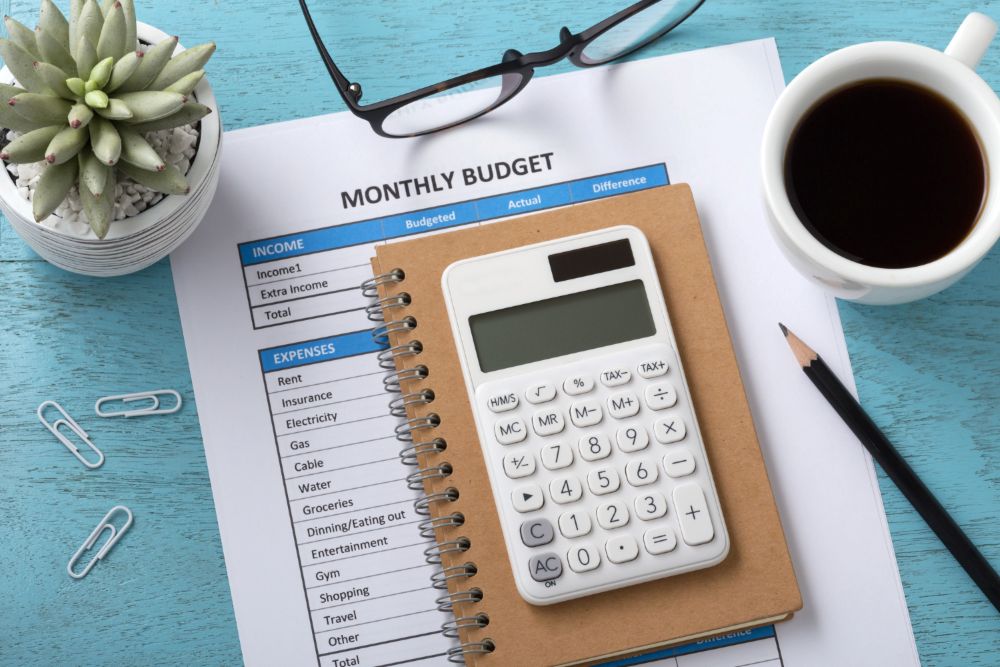
To make it easier to understand, here’s a simple monthly example. Suppose your monthly net income is Rp6,000,000. You can divide it into categories like this:
- Housing rent: Rp2,500,000
- Utilities: Rp300,000
- Groceries: Rp1,200,000
- Transportation: Rp500,000
- Insurance: Rp300,000
- Savings: Rp600,000
- Dining out and entertainment: Rp350,000
- Other expenses: Rp250,000
The total remains Rp6,000,000, matching your income.
If you spend Rp1,150,000 on groceries, you still have Rp50,000 remaining in that category. However, if you spend Rp1,300,000, you’ll need to take Rp100,000 from another category. You can manage this by:
- Reducing your dining-out budget by Rp100,000
- Cutting back on entertainment the following week
- Adjusting your grocery budget for the next month
If this situation occurs repeatedly, you’ll start to see real spending patterns. For example, if grocery expenses often exceed the budget, you may need to increase the allocation for that category. Envelope budgeting makes overspending more visible, allowing you to adjust quickly.
That’s an overview of envelope budgeting, from its definition to practical examples. This method helps you divide your income into clearly defined expense categories, making it easier to control spending, avoid overspending, and build better financial habits.
Beyond budgeting, there are times when you may need larger funds for specific needs, such as healthcare, home renovations, or additional business capital. In such situations, proper financial planning becomes essential to maintain stability.
BFI Finance offers financing solutions secured by motorcycle BPKB, car BPKB, and house/shop certificates. The company is licensed and supervised by the Financial Services Authority (OJK), ensuring its services are reliable and trustworthy.
With support from BFI Finance, you can better prepare for various financial needs with greater peace of mind. So, there’s no need to worry about finding the right financing solution because #SelaluAdaJalan with BFI Finance.