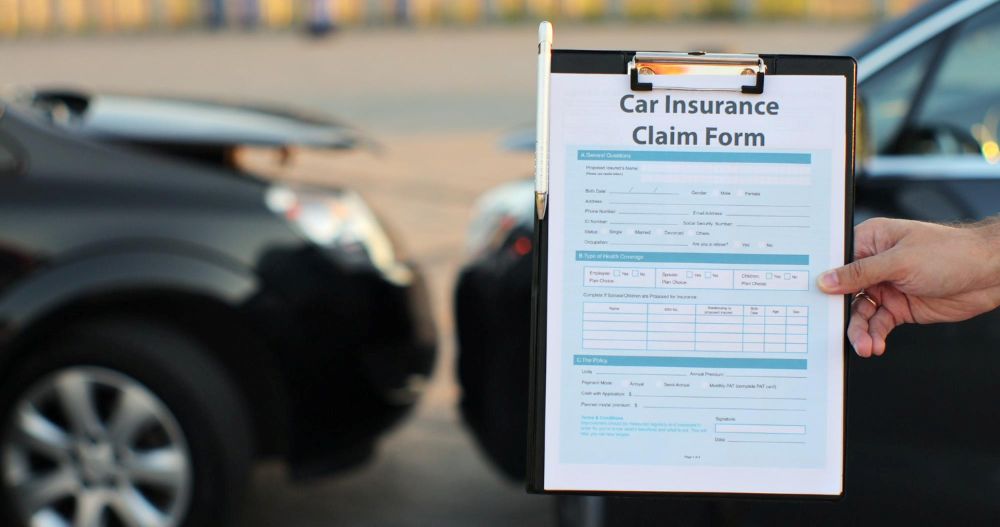
Understanding how to properly claim car insurance is important from the moment you have vehicle protection. Car insurance itself is a form of financial protection for vehicle owners against various risks.
By understanding the correct procedures, you can submit claims more easily when your car is damaged, such as scratches, dents, or even loss. To avoid confusion in unexpected situations, check out this car insurance claim guide below.
How to Claim Car Insurance
Claiming car insurance is actually not complicated, as long as you follow the applicable procedures and prepare all the requirements correctly. To ensure your claim process runs smoothly and gets approved quickly, pay attention to the following steps:
1. Contact the Insurance Company Immediately
After damage or an accident occurs, the first step you should take is to contact your insurance provider. Generally, the reporting deadline is a maximum of 5 calendar days from the incident.
Provide a brief chronology of the incident that caused the damage. By reporting quickly, the insurance company can immediately guide you through the next steps in the claim process.
2. Make Sure Your Policy Is Still Active
One of the requirements for filing a car insurance claim is ensuring that your policy is still active. If the policy is inactive due to unpaid premiums, the claim cannot be processed. Therefore, it is important to pay your premiums on time regularly.
3. Understand Your Type of Insurance Coverage
Before filing a claim, you also need to understand the type of insurance you have. In general, there are two types of vehicle protection:
- Total Loss Only (TLO): Covers losses if the vehicle is stolen or severely damaged, where repair costs reach at least 75% of the vehicle’s value.
- Comprehensive (All Risk): Covers almost all types of damage, from minor scratches to major damage, including loss.
4. Complete the Required Documents
The next step in claiming car insurance is preparing the required documents. Make sure all documents are complete to avoid delays. Usually, the required documents include:
- Copy of the insurance policy
- Copy of ID card (KTP)
- Copy of driver’s license (SIM)
- Copy of vehicle registration (STNK)
- Police report (if necessary, especially for accidents)
5. Attach Photo Evidence of the Damage
Visual evidence is important in the claim process. You need to take photos of the damaged parts of your car. These photos will help the insurance company conduct an initial assessment. The clearer the documentation, the easier the verification process.
6. Fill Out the Claim Form Completely
The claim form is an important document that should not be overlooked. You will be asked to fill in personal data and a detailed chronology of the incident. Make sure all information is accurate and complete, as the success of your claim depends on it.
7. Prepare Third-Party Documents (If Any)
If the incident involves another party, you also need to prepare additional documents from the third party. This may include identification, chronology of events, or mutual agreements. Proper coordination is important to avoid issues later.
8. Undergo Survey and Interview
After submitting all documents, you may be asked to bring your car to a partner workshop or a location determined by the insurance company. At this stage, a damage survey and possibly an interview will be conducted. You only need to explain the incident consistently with the information provided earlier.
9. Use Partner Workshops
Choosing a partner workshop offers several advantages, including a cashless process. If you choose a non-partner workshop, the system is usually reimbursement. This means you need to pay for repairs upfront and then request reimbursement according to the applicable terms.
Can You Claim Insurance If Your Car Ownership Certificate (BPKB) Is Collateralized?
You can still claim car insurance even if your vehicle ownership certificate (BPKB) is being used as collateral, for example for credit or financing. However, there are some important things to understand.
As long as your insurance policy is active and premiums are paid on time, you are still eligible to file a claim. This applies to both All Risk and TLO insurance, as long as the damage is covered under the policy.
If your BPKB is used as collateral, the financing company is usually listed as the primary beneficiary. This means that in the event of a major loss or total loss, the claim payment will first be used to settle any outstanding loan balance.
If the claim amount exceeds the remaining loan balance, the difference will be given to you as the vehicle owner. All of these terms depend on the policy and the agreement with the financing company.
In conclusion, even if your BPKB is collateralized, you can still benefit from your insurance coverage as long as you follow the proper procedures.
Understanding how to claim car insurance not only helps you deal with risks but also ensures that you can fully utilize the benefits without obstacles.
In addition, a car is a valuable asset that can be used as collateral if you need quick funds. Without selling your car, you can use your BPKB to obtain financing through BFI Finance.
Besides car BPKB, you can also explore other financing options from BFI Finance using motorcycle BPKB or property certificates (house, shop house, or office space). The process is easy, fast, and can be tailored to your needs.
BFI Finance has been operating for more than 40 years, is officially licensed, and supervised by the Financial Services Authority (OJK). So, there’s no need to worry when you need quick funds for various purposes.