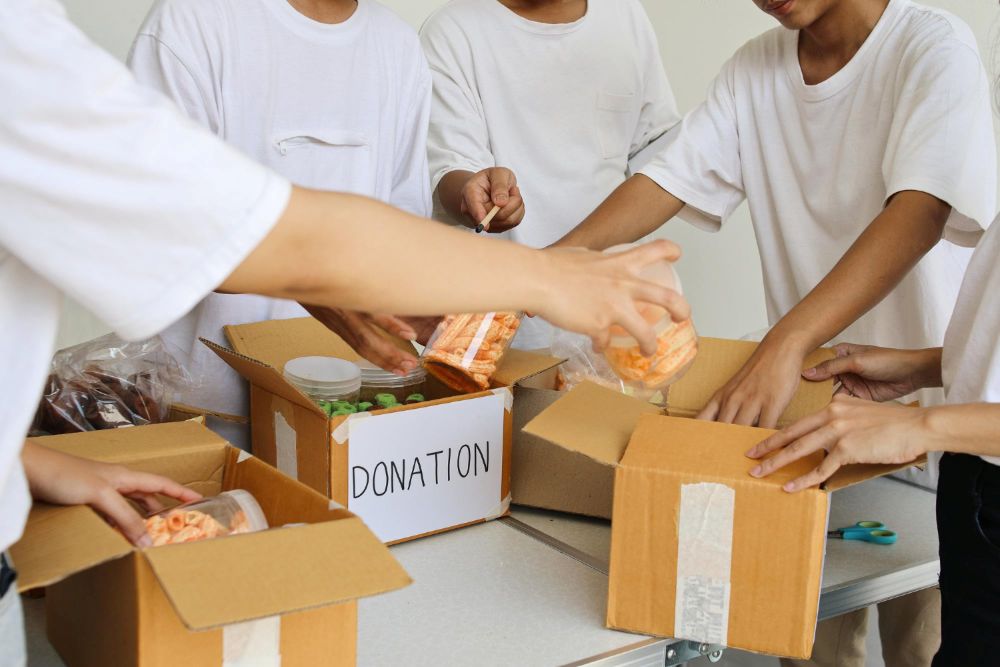
Social assistance, or bansos, is a form of government support designed to help Indonesians who need it most. The program targets low-income families, near-poor households, and other groups that meet specific eligibility criteria.
These days, checking your bansos status no longer means a trip to a government office. All you need is your ID card (KTP) data, and you can find out your status from the comfort of your home.
So, to make sure you don't get confused when checking your bansos status, here's everything you need to know.
What Is Bansos?
Bansos refers to assistance provided by the government to people who need financial or social support. It can come in several forms — cash transfers, food assistance, healthcare access, or other kinds of support depending on the specific program.
The main goal is to ease the economic burden on the community, especially for low-income or near-poor families. Through bansos, the government works to protect purchasing power, help meet basic needs, and reduce the social risks that come with financial hardship.
Bansos is also part of the broader social protection system. In other words, it's not just short-term relief — it's meant to support the long-term stability and wellbeing of recipient families.
Types of Bansos
The government runs several bansos programs, each with its own purpose and target recipients. Since every program has different eligibility criteria, not everyone qualifies for the same type of assistance. Here are the main types worth knowing:
- Program Keluarga Harapan (PKH): A conditional cash transfer program for families with specific circumstances, such as pregnant women, young children, school-age kids, elderly members, or people with severe disabilities.
- Bantuan Pangan Non Tunai (BPNT) / Program Sembako: This assistance helps recipient families meet their food needs. In practice, it may be disbursed as a balance or through other mechanisms depending on current government policy.
- Penerima Bantuan Iuran Jaminan Kesehatan (PBI-JK) Government-paid health insurance contributions for people who meet the eligibility requirements.
- Bantuan Langsung Tunai (BLT) BLT is usually rolled out under specific circumstances — for example, during targeted government policies aimed at protecting people's purchasing power. It comes in the form of direct cash payments to qualifying recipients.
- Regional Social Assistance Beyond central government programs, many regional governments run their own bansos initiatives. The type, amount, and requirements vary depending on local policy.
Why Check Bansos Status Using Your ID Card?
Checking bansos status through your KTP is necessary because the system relies on your National ID Number (NIK) as the primary data point. Your NIK allows the system to match your identity against population records and socioeconomic data — the basis for determining who qualifies for assistance.
Using your KTP makes the process more accurate, since every individual has a unique NIK. This helps reduce the risk of duplicate records, name mismatches, or identity errors.
On top of that, using your KTP makes it easy to check your status independently. All you need is your NIK, and you can follow the instructions on the official platform.
Who Qualifies for Bansos?
Eligibility criteria vary depending on the type of assistance. Generally speaking, recipients must have valid population data, be recorded in the government's socioeconomic database, and meet the welfare level targeted by the program.
Currently, bansos targeting is based on socioeconomic data grouped into deciles. A decile represents a welfare group, with the population divided into 10 segments — each representing 10% of families based on their socioeconomic conditions.
Here's how the deciles break down:
- Decile 1: The 10% of families with the lowest welfare level.
- Decile 2: Families in the 11–20% range, with low welfare.
- Decile 3: Families in the 21–30% range, with low welfare.
- Decile 4: Families in the 31–40% range, considered low or vulnerable.
- Decile 5: Families in the 41–50% range, who may still be considered for certain programs.
- Decile 6: Families in the 51–60% range, with moderate welfare.
- Decile 7: Families in the 61–70% range, with better welfare conditions.
- Decile 8: Families in the 71–80% range, with higher welfare.
- Decile 9: Families in the 81–90% range, with high welfare.
- Decile 10: Families in the 91–100% range, with the highest welfare level.
For programs like PKH and Program Sembako, priority generally goes to households in deciles 1 through 4. Meanwhile, decile 5 may still be considered for certain programs, such as PBI-JK.
Beyond decile ranking, recipients also need to meet program-specific requirements. PKH recipients, for instance, must fall into specific family categories — school-age children, pregnant women, toddlers, elderly members, or people with severe disabilities. Recipient data must also match population records to ensure the assistance reaches the right people.
What You Need Before Checking Your Bansos Status
Before checking your bansos status with your KTP, here's what you should prepare:
- A valid, legible KTP — make sure your NIK is clearly readable.
- A stable internet connection — since the check happens online, a slow connection can make pages hard to load or cause the search to fail.
- A comfortable device — whether it's a phone or laptop, make sure the screen is clear enough to read security codes or captchas.
- Access to the official website or platform — always double-check you're using a legitimate source.
- Patience for data updates — results may change as records are updated. If your data isn't listed yet, you can follow up with your local village, sub-district, or social affairs office.
How to Check Bansos Status with Your KTP
You can check your bansos status through either the official website or app. Here's how to check your bansos status by KTP in 2026:
Checking Through the Website
- Open the official Kemensos Cek Bansos website through your phone or laptop browser.
- Select the search-by-NIK option if it's available on the page.
- Enter your 16-digit NIK as shown on your KTP.
- Type in the captcha code shown on screen.
- If the code is unclear, use the refresh button to get a new one.
- Click the "Cari Data" (Search Data) button.
- Wait for the system to display your results.
- Review the information shown, including your recipient status and the type of assistance you're registered for.
If your data doesn't appear, it could mean you're not yet on the recipient list, you don't meet the program's criteria, or your data still needs to be updated through your village, sub-district, or local social affairs office.
Checking Through the App
You can also check your status through the official Cek Bansos app, which lets you view your participation status and access other features related to recipient data.
Here's how:
- Download the official Cek Bansos app from your phone's app store.
- Create an account by filling in the required identity details.
- Prepare your KTP information — NIK, full name, and address.
- Complete the account verification process as instructed in the app.
- Log in using your newly created account.
- Select the bansos check or participation menu.
- Enter the required data.
- Review the results shown in the app.
The app also includes "usul" (propose) and "sanggah" (challenge) features. The propose feature lets you nominate yourself or someone else you believe qualifies for assistance, while the challenge feature lets you report recipients you believe don't meet the eligibility criteria.
How to Check Bansos Disbursement Through Your Bank Account
Aside from checking your recipient status through the website or app, you can also track disbursement through the distributing bank. This works if you're already registered as a recipient and want to confirm whether the funds have arrived.
To check bansos disbursement via BRI or other banks, you can use mobile banking, internet banking, an ATM, or visit the nearest branch of the distributing bank directly.
Benefits of Checking Bansos Online
Checking your bansos status online comes with plenty of advantages — it's faster, more practical, and can be done from anywhere. Here's what makes it worth it:
- Faster than visiting the office in person.
- Available anytime as long as you have an internet connection.
- Saves time and transportation costs.
- Recipient information is available instantly.
- Simplifies the verification process for recipient status.
- Reduces queues at service offices.
- Accessible from multiple devices, including smartphones and laptops.
2026 PKH and BPNT Disbursement Schedule
The 2026 disbursement schedule for PKH and BPNT rolls out in stages. Timing varies by region, depending on the verification process, data readiness, government policy, and distribution mechanisms. Here's a general overview:
Phase 1: January–March 2026 The first phase covers early 2026. Recipients typically start receiving assistance based on verified data during this period.
Phase 2: April–June 2026 The second phase covers the second quarter. Disbursement during this phase happens gradually, so timing may differ across regions.
Phase 3: July–September 2026 The third phase spans the middle to the end of the third quarter. Recipients are encouraged to keep monitoring their status through official channels for the latest updates.
Phase 4: October–December 2026 The fourth and final phase covers the end of the year, with disbursement based on the latest data updates and applicable policy.
Keep in mind that this schedule reflects general timeframes only. Exact disbursement dates will vary depending on your region, the distributing bank, PT Pos Indonesia, or other technical government policies.
That covers everything you need to know about checking your bansos status through the official website or app. Bansos can certainly help ease the economic burden on families and cover basic needs.
That said, not every financial need can be met through bansos alone. Sometimes you need extra funds for bigger or more urgent needs — education costs, healthcare, home renovations, business capital, or other family expenses.
If you're looking for a financing solution, BFI Finance offers loans secured by motorcycle BPKB, car BPKB, or house/shophouse certificates. Loan amounts start from Rp1 million up to 80% of the vehicle's value for motorcycle BPKB-secured loans. If you need a larger amount, car BPKB-secured loans offer disbursement starting from Rp10 million up to 90% of the vehicle's value. Meanwhile, loans secured by house or shophouse certificates offer limits from Rp100 million up to Rp5 billion. BFI Finance offers long tenors, competitive interest rates, and a hassle-free process — and is licensed and supervised by Indonesia's Financial Services Authority (OJK).
So, make sure you choose the right financing option, because #SelaluAdaJalan (There's Always a Way) with BFI Finance!