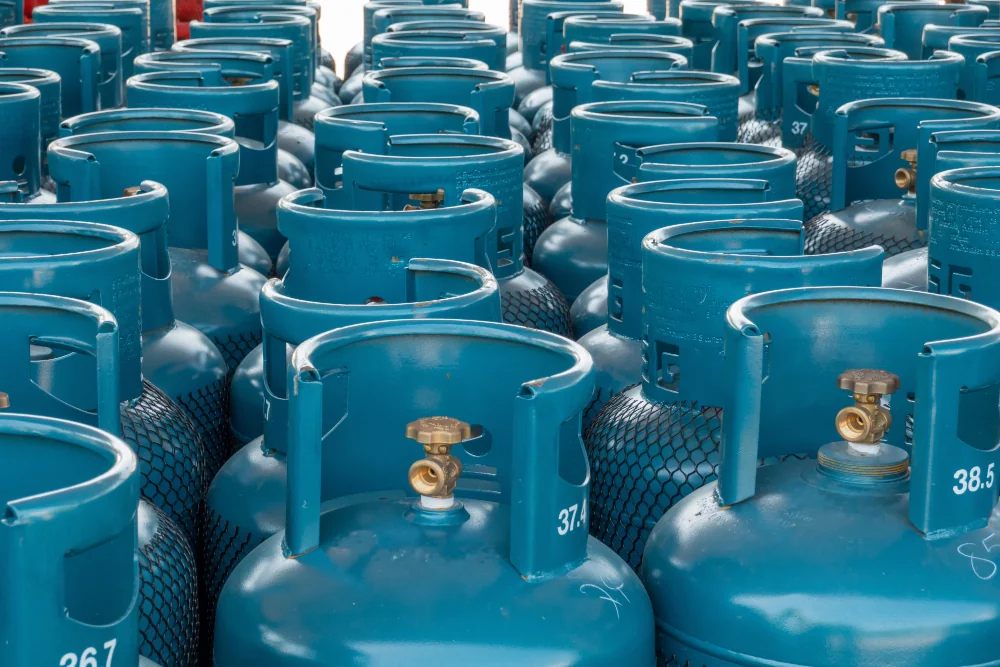
The growing demand for LPG continues to make this business opportunity attractive year after year. That’s why many people are starting to explore how to become an LPG gas agent as a promising long-term business opportunity, especially since LPG remains a stable and essential household need.
Although it may seem simple, becoming an LPG gas agent still requires careful preparation—from understanding the requirements and licensing procedures to calculating startup capital and potential profits. If you plan to pursue this business seriously, it’s important to understand every step involved so the process runs smoothly.
Below is a complete guide covering the requirements, registration process, and initial capital needed to start an LPG gas agency business.
Requirements to Become an LPG Gas Agent
Before discussing the process, there are several requirements you must fulfill to become an LPG gas agent. In general, these requirements include administrative documents, financial readiness, business location preparation, and compliance with applicable regulations.
1. Administrative Requirements
To apply as a home-scale LPG agent, you must prepare several legal documents, such as:
-
National ID card (KTP)
-
Taxpayer Identification Number (NPWP)
-
Business Identification Number (NIB)
-
Building Permit (formerly IMB, now known as Building Approval or PBG)
-
Proof of land ownership or lease agreement
-
Bank account balance under the business owner’s name
-
Application letter to become an LPG agent
-
Statement letter confirming compliance with regulations
Having complete administrative documentation will help ensure your application proceeds smoothly during the verification stage.
2. Financial and Business Location Readiness
You must also have sufficient capital to procure gas cylinders and cover operational costs. This can be demonstrated through bank statements and a financial plan.
In addition, your business location must meet technical and safety standards, such as:
-
Being in a strategic and accessible location
-
Having proper ventilation
-
Having strong and safe flooring for cylinder storage
3. Compliance with Regulations
As an LPG agent, you are required to comply with regulations set by Pertamina. These include:
-
Selling subsidized LPG according to the official retail price (HET)
-
Reporting sales regularly
-
Avoiding illegal activities such as gas mixing, stockpiling, or selling outside the assigned distribution area
How to Become an LPG Gas Agent
After understanding the requirements, the next step is learning the application process for becoming an LPG gas agent. The process ensures that all administrative, safety, and regulatory standards are met.
Here are the steps you need to follow.
1. Register Through the Official Website
The first step is registering through the official website of Pertamina or Pertamina Patra Niaga.
You will need to:
-
Create an account
-
Log in to the registration portal
-
Fill out the application form
-
Upload the required business documents
Make sure all administrative documents are completed correctly to proceed to the verification stage.
2. Verification Process
After submitting your application, the information will undergo a verification process.
During this stage, Pertamina will:
-
Review your personal and business data
-
Verify the authenticity of your legal documents
-
Confirm whether the proposed location is still available for new LPG agents
This stage may take some time because it involves a thorough evaluation to ensure that applicants meet the established standards.
3. Financial Capability Assessment
Even for a home-scale operation, becoming an LPG gas agent requires substantial startup capital.
Therefore, Pertamina will conduct a financial capability assessment by reviewing documents such as:
-
Bank account statements
-
Financial support letters (if available)
You may also be asked to present an initial budget plan for purchasing and refilling gas cylinders. This process ensures that you can maintain inventory and manage the business sustainably.
4. Business Location Inspection
Besides financial readiness, the business location also plays a crucial role.
After passing the financial screening, representatives from Pertamina may conduct a site inspection to evaluate:
-
Strategic location compared to other agents or distributors
-
Safety of the gas cylinder storage area
-
Storage capacity meeting minimum standards
-
Accessibility for distribution vehicles
5. Agency Operational Implementation
Once all stages are completed and approved, you will be required to sign a cooperation agreement.
After signing the contract, you will officially operate as an LPG gas agent. This means you will begin:
-
Receiving LPG supplies
-
Distributing them to bases or end customers
-
Selling the gas according to the agreed price regulations
6. Sales Performance Evaluation
Even after operations begin, Pertamina will conduct periodic evaluations covering:
-
Sales performance
-
Operational safety
-
Compliance with applicable regulations
If your performance meets expectations, the partnership will continue. However, violations or poor performance may lead to warnings or even contract termination.
Difference Between LPG Agents and LPG Bases
In the LPG distribution chain, agents and bases have different roles.
Here is a simplified comparison:
Supply source
Agents receive LPG supplies directly from Pertamina depots and SPBE facilities, while bases obtain their supply from agents.
Storage capacity
Agents have larger storage facilities, while bases usually have smaller storage capacity.
Operational scale
Agents operate across wider distribution areas, while bases operate on a smaller local scale.
Capital requirements
Becoming an agent requires significantly higher capital than becoming a base because of operational costs such as cylinder procurement and facility rental.
Distribution flow
Agents distribute LPG to bases or sub-agents, while bases distribute it to retailers or directly to consumers.
Selling price
Agents sell LPG at wholesale prices, while bases follow the government’s Highest Retail Price (HET).
Estimated Startup Capital
The estimated startup capital for an LPG gas agency business ranges from IDR 100 million to IDR 150 million.
This estimate typically includes:
-
Gas cylinder stock
-
Licensing fees
-
Safety equipment
-
Business location rental
Keep in mind that the required capital may vary depending on the operational area and the type of LPG being sold.
Tips for Running a Successful LPG Gas Agency
After understanding the requirements and procedures, consider the following tips to ensure your LPG gas agency runs smoothly and sustainably.
Choose a strategic location
Select a location that is easily accessible and frequently visited to increase your chances of attracting customers.
Maintain consistent stock availability
Ensure gas supplies remain stable every day to avoid disappointing customers.
Offer additional services
Delivery services can provide added value, especially for LPG bases that rely on regular supply.
Prioritize safety
Implement strict safety measures such as installing no-smoking signs, fire hazard warnings, 24-hour CCTV, and conducting routine cylinder inspections.
Reinvest profits into the business
Although the initial capital may reach IDR 150 million, allocating part of your profits for business expansion can help increase capacity and revenue.
Use reliable operational vehicles
Choose trucks or vehicles with good performance to support smooth LPG distribution.
Starting an LPG gas agency requires proper preparation—from understanding the requirements and licensing procedures to calculating the capital needed. With careful planning, you can build a promising and sustainable business, especially since LPG demand tends to remain stable over time.
In addition to calculating startup capital, it’s also important to prepare for other financial needs that may arise during business operations. If your available funds are not sufficient, financing solutions from BFI Finance may help support your business plans.
Financing from BFI Finance can be applied for with collateral such as motorcycle BPKB, car BPKB, or property certificates (house, shop house, or commercial property). The process is designed to be transparent and practical to support both business and personal financial needs.
BFI Finance is officially licensed and supervised by the Otoritas Jasa Keuangan, providing greater peace of mind when applying for financing.
So don’t hesitate to take the next step in growing your business—because there is always a way forward with BFI Finance.