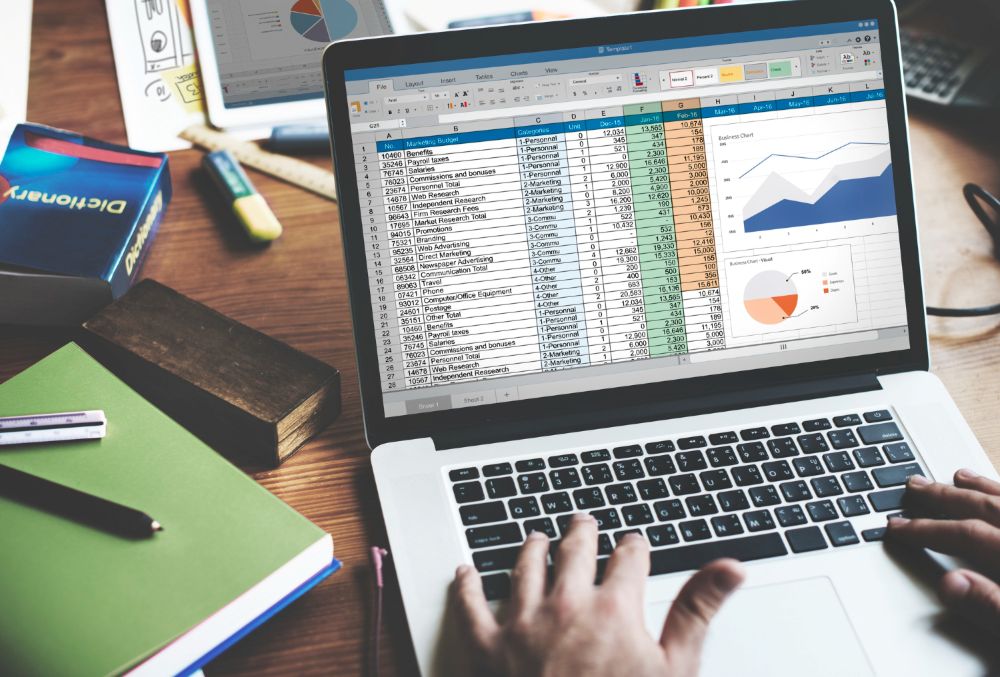
In today's digital age, managing your business finances no longer means hunching over a notebook or wrestling with endless spreadsheets. More and more companies are making the switch to accounting software — powerful tools that simplify everything from recording transactions and generating financial reports to managing taxes, all in one place.
If you're a business owner, the right accounting software doesn't just save you time. It gives you access to real-time financial data that helps you make smarter, faster business decisions.
But what exactly is accounting software, and which one is right for your business? Let's break it all down.
What Is Accounting Software?
Accounting software is a digital solution designed to help businesses automate and manage their financial processes — from tracking income and expenses to generating invoices, reconciling bank statements, and producing profit and loss reports, all within a single integrated system.
Unlike manual bookkeeping, which is time-consuming and prone to human error, accounting software automates repetitive tasks and keeps your financial data accurate and up to date.
There are two main types:
On-premise software is installed and run directly on a company's own servers and IT infrastructure — giving businesses full control over their data environment.
Cloud-based software is hosted online and accessible from any device with an internet connection — ideal for businesses that don't have their own IT infrastructure or need flexibility for remote work.
Key Functions of Accounting Software for Business
Whether you're running a small startup, a growing SME, or a large enterprise, accounting software brings a wide range of benefits to your daily operations. Here are the core functions:
- Automatic Transaction Recording Every sale, purchase, expense, and payment is recorded automatically — making bookkeeping faster and dramatically reducing the risk of human error.
- Effortless Financial Reporting Generate balance sheets, income statements, cash flow reports, and equity statements instantly — no manual calculations required. Accurate reports give you a clear picture of your company's financial health at any moment.
- Cash Flow Monitoring Cash flow is the lifeblood of any business. Accounting software helps you track incoming and outgoing cash in real time, so you can maintain financial stability and spot potential issues before they become serious problems.
- Inventory Management Many accounting platforms include built-in inventory management features, allowing businesses to monitor stock levels in real time and conduct stock counts with ease. This is especially valuable for retail, distribution, and manufacturing businesses.
- Tax Management Made Simple From calculating taxes to generating tax reports and storing transaction records for audits, accounting software takes the stress out of tax compliance and keeps you prepared year-round.
- Smarter Business Decision-Making With real-time financial data at your fingertips, you can make faster, more informed decisions — whether you're evaluating profitability, planning an expansion, or reviewing your spending strategy.
Why Use Accounting Software? The Key Advantages
Beyond financial recordkeeping, accounting software delivers a range of broader business benefits:
- Saves significant operational time
- Minimizes recording errors
- Simplifies teamwork and financial collaboration
- Keeps your data more secure
- Makes audits and financial reviews easier
- Boosts overall business efficiency
For any business looking to operate more professionally and scale sustainably, accounting software has become an essential tool — not just a nice-to-have.
Top Accounting Software Recommendations
Here are five accounting platforms worth considering for your business:
1. Kledo
Kledo is a cloud-based accounting solution widely used by businesses across Indonesia, from small SMEs to growing mid-sized companies. Its clean, intuitive interface makes it accessible even to users without an accounting background.
Key features include:
- Invoice creation
- Stock management
- Bank reconciliation
- Automatic financial reports
- Asset management
- Multi-user access
- Business integrations
Kledo's cloud-based system lets you monitor your business finances in real time and access your data from anywhere, at any time — making it a strong choice for modern Indonesian businesses.
2. QuickBooks
QuickBooks is one of the most recognized accounting platforms globally, widely trusted by small and medium-sized businesses. It offers comprehensive features for bookkeeping, invoicing, payroll, and financial reporting, with strong international integrations that make it suitable for businesses with global operations.
3. Xero
Xero is a cloud-based accounting platform known for its sleek, modern interface and excellent collaboration features. Its core offerings include automated invoicing, bank reconciliation, expense management, project tracking, and a real-time financial dashboard. Xero is especially popular among startups and digital-first businesses.
4. Zoho Books
Zoho Books is part of the broader Zoho business ecosystem, which covers everything from CRM to project management. It's a great fit for businesses that need tight integration between their accounting system and other operational tools.
5. Wave
Wave is an ideal choice for freelancers and solopreneurs, offering solid basic accounting features — transaction recording, invoicing, and simple financial reports — at a very accessible price point.
How to Choose the Right Accounting Software: 5 Practical Tips
With so many options on the market, here's what to consider before making your decision:
Match it to your business size. SMEs typically need something simple and user-friendly, while larger enterprises may require more advanced features and scalability.
Check the feature set. Make sure the software covers what your business actually needs — whether that's inventory tracking, tax tools, multi-user access, or bank integration.
Prioritize ease of use. A clean, intuitive interface helps your team adapt quickly and reduces the chance of costly mistakes.
Evaluate data security. Since you'll be storing sensitive financial data, ensure the platform offers strong security measures and reliable data backup.
Compare pricing vs. value. Look beyond the price tag — weigh the subscription cost against the features offered to make sure it fits your budget and delivers real value.
Conclusion
Accounting software is no longer a luxury — it's a fundamental tool for any business that wants to manage its finances with efficiency, accuracy, and confidence. With automation handling the heavy lifting, you can save valuable time, minimize errors, and always have reliable financial data ready when you need it most.
Among the available options, Kledo stands out as a strong contender for Indonesian businesses, offering a comprehensive feature set, ease of use, and a platform built with local business needs in mind.
This article is the result of a collaboration between BFI Finance and Kledo.